
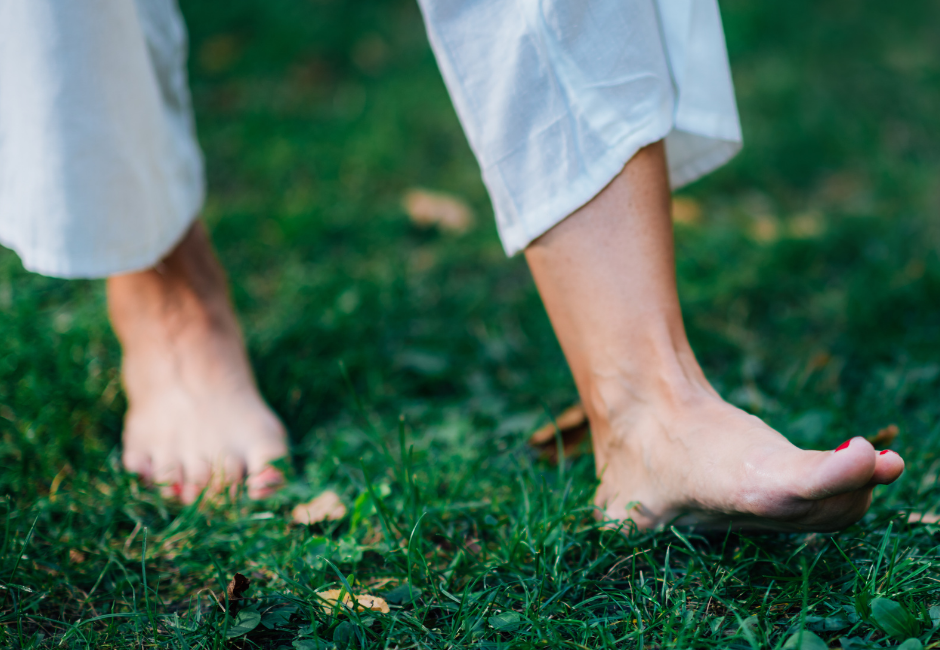
There’s something about a warm summer evening that makes shoes feel completely optional. You’re only popping out to deadhead the roses, water the pots, or grab something from the shed — so why bother with footwear? For a lot of us, bare feet on grass is one of the small joys of the season.
But your feet are picking up more than just a bit of sunshine out there. Gardens are full of small, easy-to-miss hazards, and bare feet have no protection from any of them.
What your feet are really exposed to
Splinters and thorns. Decking, raised beds, trellises, and rose bushes are all obvious culprits, but it’s often the things you don’t expect — a stray bit of bamboo cane, a broken plant pot, a hidden bit of grit — that catch people out.
Cuts from garden tools and debris. Secateurs, edging shears, broken glass, sharp stones… it doesn’t take much for a small cut to happen, and grazes picked up outdoors are more likely to pick up dirt and bacteria along with them.
Verrucas. This is the one people don’t expect. Verrucas are caused by a virus that thrives in warm, damp conditions — and damp grass, wet decking, and shared paddling pools tick every box. If you’ve got kids running around the garden barefoot all summer, or you’re barefoot on the lawn after watering, it’s a more common source of verrucas than most people realise.
Stings and bites. Bees, wasps, and ants are far more likely to sting an exposed foot than one that’s covered, and a sting on the sole or between the toes can be surprisingly uncomfortable.
Fungal infections. Damp grass and warm skin are also a good combination for fungal issues like athlete’s foot, particularly if you’re going straight from garden to shower without drying properly in between.
Its not about giving up bare feet
None of this means you need to garden in wellies all summer. Bare feet outdoors are one of those simple pleasures, and most of the time nothing comes of it. It’s more about knowing what to look out for, so a small issue doesn’t turn into a bigger one.
A few simple habits go a long way:
- Give your feet a proper look over after gardening, especially between the toes and on the soles
- Clean any cuts or grazes promptly, even ones that seem minor
- Dry your feet thoroughly if they’ve been wet or damp
- Keep an eye out for anything that looks like a stubborn patch of hard skin with tiny black dots, or a lesion that isn’t healing as expected — these can be signs of a verruca rather than just a callus
When its worth getting checked
Most garden mishaps sort themselves out. But if you’ve noticed something that hasn’t improved after a week or two, feels tender when squeezed from the sides, or you’re just not sure what you’re looking at, it’s always worth having it looked at properly rather than guessing.
That’s exactly what our Verruca Assessment is for. We’ll take a proper look, confirm what’s actually going on, and talk you through the right treatment options — including Swift® microwave therapy, which we’re still the only clinic on the Wirral offering.
So enjoy the garden, kick the shoes off if that’s your thing — just keep half an eye on what your feet are picking up along the way.
Think you might have picked up a verruca this summer? Book a Verruca Assessment with our team and let’s get it sorted before it becomes a bigger problem.